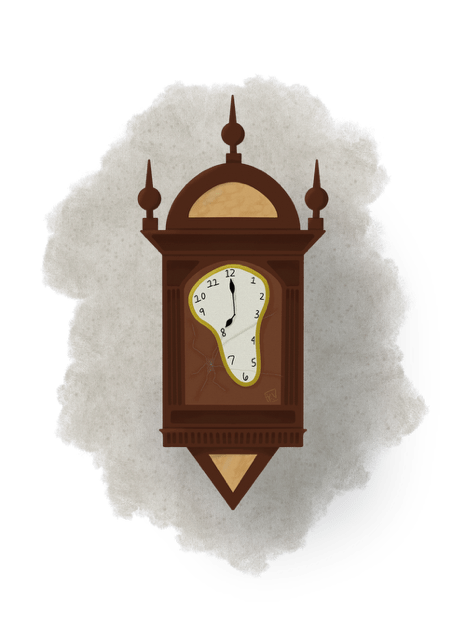
I’m not sure when time stopped for the broken clock face. The fractured glass displayed a big and small hand that was perpetually frozen at eight o’clock, but whether that was morning or evening I could not tell the difference. It was a liminal hour, created by an absence that was never wanted. Perhaps the house felt melancholy too, expressing itself through the eternal crack etched across time and surface.
To me, home is the place where I sleep and eat, where my family gathers. I left behind the bold, yellow color of my room and clothes that were too small, forgotten in dust and darkness. But then there were things that are yours. Frames of Ansel Adams. Running shoes with worn soles. An aged, clunky leather recliner perfect for afternoon naps or watching your favorite movies. I imagine you exploring those worlds of epic westerns, space and fantasy. For the sake of normalcy, I slept and ate, although this time on my own. The house was a time capsule of memories. Once difficult to face because it reminded me of you, and now the only place I find comfort because it still does.
Without meaning to, I sometimes notice how grief makes itself known in other homes. I walked into a dear friend’s house and was greeted by a stillness, the kind that asserts itself boldly during the holidays, staining togetherness and intimacy. One chair less, we sat down to spring rolls and noodles carefully placed in delicate china. It was an unconventional spread of food so it didn’t feel too much like Thanksgiving. Conversation flitted a beat behind sips of soup. I told myself everyone was just too engrossed in smells and taste. As if challenging the moment, my friend made an endearing comment. She spoke their name, a sound that rippled through the air and unsettled it gently. Family members stiffened, recoiling from words and memories like hands withdrawing from hot steam. Dinner settled back into silence, the quiet itself a form of graciousness.
What becomes more apparent about loss is how it affects your grammar. It’s natural to inquire about life in a way that seems simple. One friend was asked, “What is your dad like?” The question led to a thoughtful pause, he was like offered as a subtle correction instead of explanation. But there are things that remain in the present tense, like ownership of belongings or describing cultural background. So maybe time doesn’t always stop; it oscillates somewhere in between ceased existence and preservation. A broken clock face is still a working clock; it just never occurred to me to reset it.
Celine Rochon, MS4
Saint Louis University School of Medicine

Leave a comment